Why Arizona Is a Classic Car Paradise
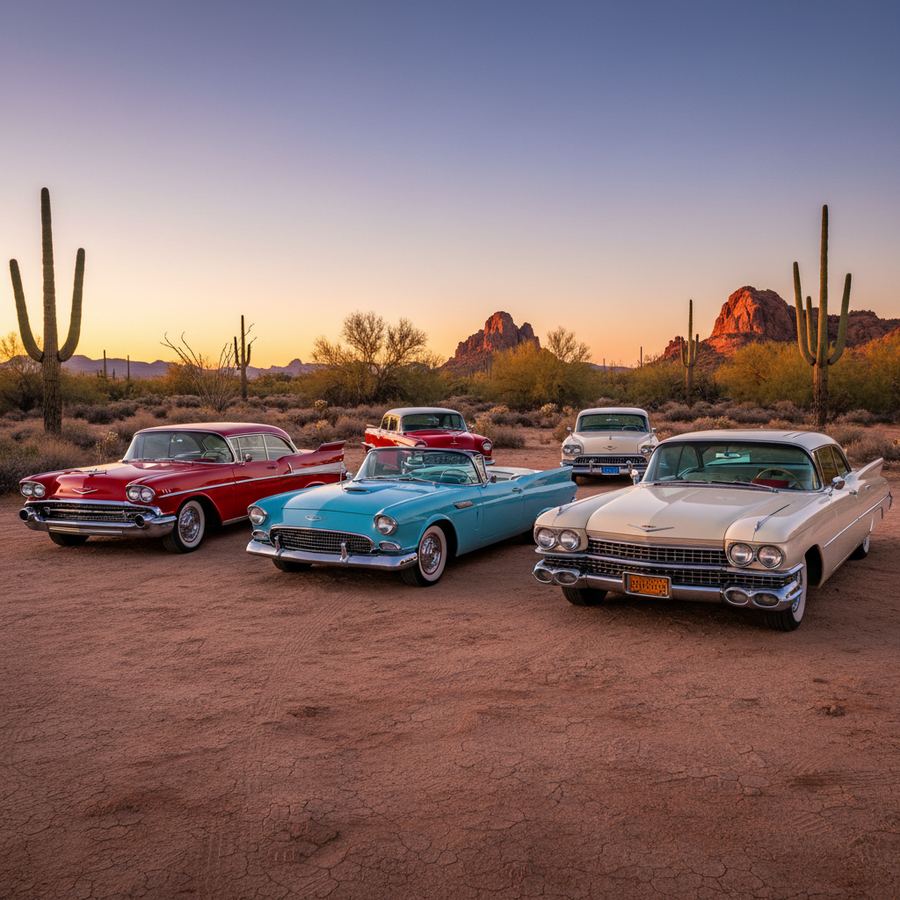
Ask anyone in the collector car world where to find clean, rust-free vintage cars, and Arizona will be in the first three states they name. Publications like Hagerty regularly feature the state in their coverage of the best places to own a classic. There is a reason for that, and it goes deeper than the weather. The state's dry climate is the foundation, but the culture, the demographics, the driving conditions, and the sheer concentration of car people all contribute to making Arizona one of the best places in the country to own, drive, buy, or sell a classic car.
The Climate Advantage
This is the obvious one, but it is worth understanding why it matters so much. Arizona's desert climate means extremely low humidity for most of the year. Rain is infrequent and concentrated in brief monsoon bursts during the summer. Snowfall is nonexistent in the Valley and southern Arizona. And road salt, the silent killer of every car in the Midwest and Northeast, does not exist here.
The practical result is that cars do not rust in Arizona. A 1965 Mustang that has spent its entire life in Phoenix will have original floors, original trunk pans, and original fenders. That same car in Ohio would need thousands of dollars in sheet metal work just to be structurally sound. This is not an exaggeration. Anyone who has bought a "rust-free Arizona car" and compared it to a Midwest example of the same model knows exactly what this means.
The dry air also preserves interiors, weatherstripping, rubber components, and wiring. UV damage from the intense sun is the tradeoff. Paint fades faster here, dashboards crack, and vinyl dries out if not maintained. But sun damage is cosmetic and fixable. Rust is structural and often fatal to a car's viability. Arizona cars need paint correction. They do not need new floors.
No Salt, No Rust, No Problem
It is worth emphasizing this point because it is the single biggest factor in Arizona's classic car reputation. The complete absence of road salt means that Arizona-titled cars command a premium nationally. When you see a for-sale listing that says "Arizona car, never seen salt," buyers pay attention. Dealers across the country buy inventory from Arizona and resell it in markets where rust is endemic.
This also means that the average condition of classic cars you see at Arizona shows and meets is noticeably higher than in other states. When the metal is good, owners are more willing to invest in paint, chrome, and mechanical work because they are building on a solid foundation. The rising tide of clean sheet metal lifts the entire local car culture.
Year-Round Driving
In most of the country, classic cars go into storage from November through March. Garages get sealed, batteries get disconnected, and cars sit on jack stands for five months. In Arizona, the season when you would want to store a car (summer, when it is brutally hot) is only about three months long, and even then, plenty of people drive their classics in the evening.
October through May in Phoenix is some of the best driving weather in the country. Clear skies, temperatures in the 60s and 70s, dry roads, and minimal traffic on the backroads and mountain highways. That is eight months of open-top, windows-down, classic car driving. People who move here from cold-weather states are genuinely shocked at how much more they use their cars.
The year-round driving season directly supports the cruise night scene and the car show calendar. Events run nearly every week of the year because the weather cooperates nearly every week of the year. Try running a car show in Michigan in February. In Arizona, February is prime season.
The Snowbird Effect
Every winter, tens of thousands of retirees migrate to Arizona from the upper Midwest, the Northeast, and Canada. Many of them bring cars. Some bring their personal classics, which they drive during their Arizona stay and garage at home during the summer. Others buy cars here specifically because they spend half the year in the state.
The snowbird population has a measurable impact on the car scene. It injects money, expands the pool of interesting vehicles, and creates a secondary market for storage, maintenance, and restoration services. Several shops in the Scottsdale and Mesa areas have client bases that are heavily snowbird-driven, with cars getting serviced and maintained during the winter months.
The snowbird effect also means that January and February are the peak months for the Arizona car scene. This is when the population swells, the weather is perfect, and the big events like Scottsdale Car Week and the collector car auctions draw national and international attention. The timing is not coincidental. These events are scheduled when Arizona's population and enthusiasm are at their highest.
The Restoration and Service Infrastructure
Because Arizona has such a high concentration of classic cars, the state has developed a strong infrastructure to support them. The Phoenix metro area has dozens of shops that specialize in restoration, mechanical work on older vehicles, upholstery, paint and body, and performance upgrades. Many of these shops have national reputations.
Finding someone who can rebuild a Rochester Quadrajet or set the timing on a points ignition is not difficult here. In many other states, the old-school mechanical knowledge is fading as the technicians who grew up working on these cars retire. Arizona still has that knowledge base, and it is being passed on to younger shop owners who recognize the value of the classic car market.
Parts availability is strong too. Swap meets are regular occurrences, and there are salvage yards in the Phoenix and Tucson areas that specialize in classic car parts. The Goodguys swap meet alone, held twice a year at WestWorld of Scottsdale, is a major source of parts for local restorers.
The Collector Car Market
Arizona is one of the top collector car markets in the country by volume. The January auctions in Scottsdale collectively move more money than any other single-location auction event in the world. But the auction market is just the visible tip. The private sale market, the dealer market, and the casual person-to-person market are all active year-round.
If you are looking to buy a classic car, Arizona is a smart place to shop. The pool of available vehicles is large, the condition tends to be better than average, and the concentration of knowledgeable buyers and sellers keeps pricing honest. You can find everything from $5,000 project cars to seven-figure concours-level restorations.
Selling a classic car in Arizona is equally advantageous. The demand is high, the buyer pool is educated, and the absence of rust means your car's condition speaks for itself. There is no underselling a clean Arizona car to a market that knows what "no rust" actually means.
The Driving Roads
Arizona has world-class driving roads, and most of them are empty for much of the year. The mountain highways north of Phoenix through Payson and into the Mogollon Rim country offer hundreds of miles of sweeping curves through pine forests. The Apache Trail east of Phoenix is one of the most scenic drives in the Southwest. Highway 89A through Oak Creek Canyon from Flagstaff to Sedona is breathtaking. And the desert highways across southern Arizona have the kind of open, flat, endless stretches that make a classic car with a big engine and an open road feel like exactly what it was built for.
Many of these roads are in excellent condition because Arizona's dry climate is as kind to asphalt as it is to sheet metal. Potholes from freeze-thaw cycles, a constant problem in cold-weather states, are rare here. You can drive a lowered car through most of Arizona without worrying about bottoming out on a frost heave.
The Community
The density of car enthusiasts in Arizona creates a community that is broader, deeper, and more active than most states can support. There are clubs for nearly every make and era. There are weekly meets in every part of the Valley. There are shows every weekend during the season. And there is a general culture of automotive appreciation that goes beyond organized events.
People wave at each other on the road here. A classic car parked at a gas station will attract a conversation. The guy at the parts counter at AutoZone might turn out to be building a 1970 Chevelle in his garage. This is a car state in a way that is hard to quantify but immediately apparent when you live here.
The East Valley meets, the cruise nights, the shows, the drag racing, the off-road scene, and the auction culture all overlap and feed each other. People who show their cars at Goodguys also go to Pavilions on Saturday night. The bracket racer at Wild Horse also has a clean Tri-Five in his garage. The collector who buys at Barrett-Jackson also drives to Cars and Coffee on Saturday morning.
Arizona is not a classic car paradise because of any single factor. It is the combination of climate, demographics, infrastructure, geography, and a community that has been building on itself for decades. Every year, more people move here and discover what Arizona car people already know: this is one of the best places in the country to own something interesting and actually use it.