Reader Ride: 1969 Camaro Restoration - 5 Years, One Garage, Show Quality
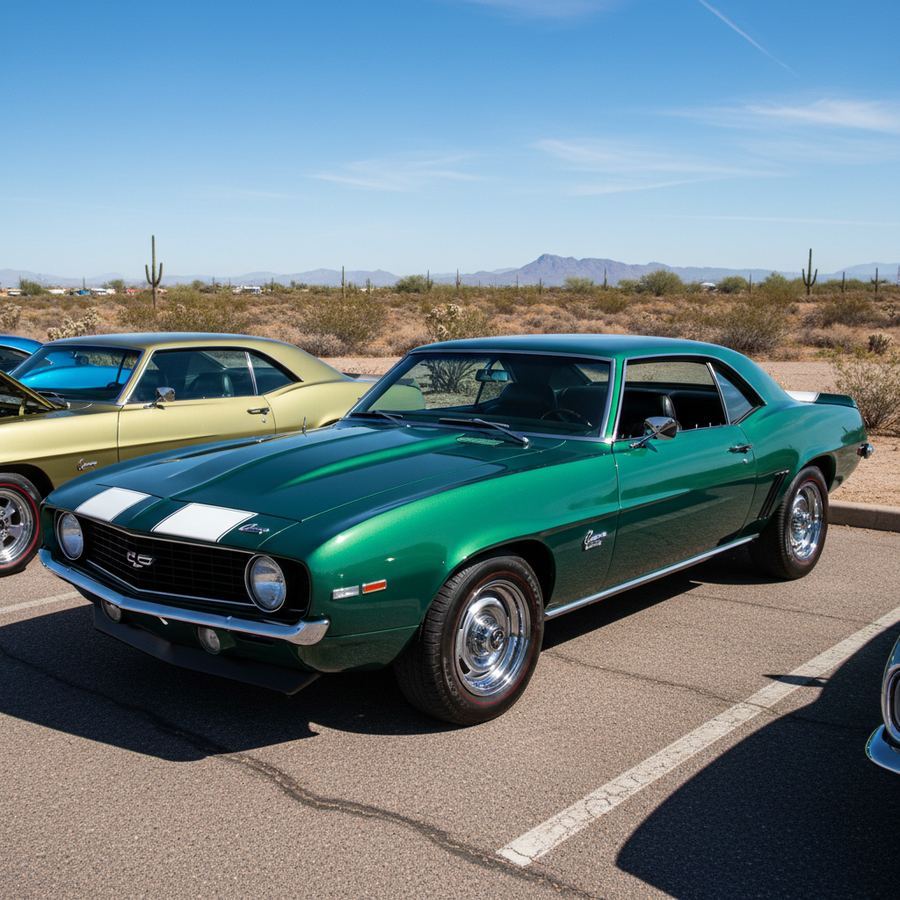
Ray Dominguez bought a 1969 Camaro SS in 2019 for $6,500 out of a storage unit in Glendale. The car had not moved under its own power in over a decade. The original 350 was seized, the floors were rusted through, and the interior was gutted down to bare metal and mouse nests. Most people would have called it a parts car. Ray called it a project.
"I knew what it was the second I saw it," Ray says. "You could tell the body was straight. The quarters were solid. The cowl was dry. It needed everything, but the bones were there, and that is what you cannot fake on these cars."
The Starting Point
Ray trailered the Camaro back to his two-car garage in north Phoenix and spent the first three months doing nothing but disassembly and documentation. Every bolt, every bracket, every piece of trim came off and got bagged, labeled, and photographed. He filled a wall of shelves with parts and started a spreadsheet to track what needed replacement versus what could be restored.
"My wife thought I was insane," he says. "I had a car in pieces in the garage and a spreadsheet with 400 line items. She asked me when it would be done and I told her five years. She laughed. Took me almost exactly five."
The frame came out, got media-blasted, and was powder-coated satin black. Ray rebuilt the front suspension with tubular control arms, QA1 coilovers, and rack-and-pinion steering. The rear got a narrowed 9-inch Ford with 3.73 gears and adjustable upper and lower control arms. Disc brakes went on all four corners. The plan from the start was a car that looked stock from 20 feet away but drove like something built this decade.
The LS3 Swap
Dropping the original 350 was never in question for Ray. He pulled an LS3 from a wrecked 2015 Camaro SS, along with the T-56 six-speed manual transmission. The engine had 28,000 miles on it and was in perfect condition.
"I know the purists hate the LS swap," Ray says. "I get it. But I wanted a car I could drive hard, get 20 miles per gallon on the highway, and not worry about vapor lock in an Arizona summer. The LS does all of that and makes better power than the original engine ever did."
The swap used a Holley retrofit fuel injection system with a front-mounted sump and a custom fuel line run through the tunnel. Ray fabricated the engine mounts himself using a jig he built from plans he found on a Camaro forum. The headers are long-tube Hooker units that tuck tight to the frame rails. The exhaust runs through a Magnaflow system with an X-pipe. It sounds like a proper American V8 without being obnoxious at idle.
Wiring was the part Ray dreaded most, and it turned out to be the part that took the longest. He ran a standalone Holley Terminator X harness for the engine management and built a completely new body harness using a kit from American Autowire. The entire electrical system is clean, labeled, and accessible behind the dash. No tape balls, no mystery wires.
"I probably spent four months just on wiring," Ray says. "Evenings and weekends, sitting at the workbench with a crimping tool and a wiring diagram. It is the least glamorous part of a build but it is the part that determines whether the car is reliable or a nightmare."
The Paint
Ray did the bodywork himself but farmed the paint out to a shop in Tempe that specializes in restoration-quality finishes. The car went in prepped, primed, and block-sanded. It came back in Rally Green, a factory-correct color for the 1969 SS, laid down in a modern base-coat-clear-coat system with three coats of clear, wet-sanded and buffed to a mirror finish.
"That was the hardest check to write," Ray admits. "But I had done everything else myself and I was not going to risk the paint. Bodywork I can learn. Spraying a car in a booth to show-quality standards takes years of experience and equipment I do not have."
The result speaks for itself. Under direct sunlight, the green shifts from deep forest to almost emerald depending on the angle. The panel gaps are even. The door shut lines are straight. It looks like it rolled off the Norwood assembly line last week, except everything underneath is better than GM ever built it.
The Interior
Inside, Ray went with a resto-mod approach that keeps the general factory layout but upgrades the materials and functionality. The seats are reproduction Deluxe Houndstooth units with modern foam and better bolstering. The door panels are correct-pattern reproductions. The headliner is new. The carpet is molded and fitted properly, not a loose drop-in.
The dash retains the original gauge layout but Ray replaced the instruments with Dakota Digital units that look period-correct from a distance while giving accurate readings. Behind the glovebox, a compact Vintage Air system provides real air conditioning that actually works in Phoenix, which is not optional equipment if you want to drive the car more than three months out of the year.
The steering wheel is a reproduction wood-rimmed unit that matches what the car would have had from the factory. The shifter for the T-56 comes up through the console in the stock location. Sitting inside, the only obvious tell that this is not a stock 1969 interior is the quality of the fit and finish, which is better than the factory ever achieved.
On the Road
Ray drove the Camaro to its first show at a Saturday morning meet in Scottsdale in early 2024. He had spent the previous week sorting out minor issues: a small exhaust leak, a speedometer calibration, and a rattle in the passenger door that turned out to be a loose window regulator bolt.
"Driving it for the first time was surreal," he says. "I had spent five years looking at this car on jack stands and on the rotisserie. Hearing it run and feeling it pull through the gears on the street, that is why you do this. No amount of looking at it in the garage compares to driving it."
The car makes roughly 430 horsepower at the crank in stock LS3 trim. With the lightweight first-gen body sitting on modern suspension, it handles in a way that the original engineers never intended. Ray says it tracks straight at highway speed, brakes with confidence, and puts the power down without drama. The Vintage Air keeps the cabin comfortable even in August.
Show Results and What Comes Next
Since that first outing, the Camaro has picked up a handful of trophies at local shows and turned heads at every cruise night Ray has brought it to. He says the reactions from other first-gen Camaro owners have been the most rewarding part.
"The older guys who grew up with these cars, they get it," Ray says. "They look under the car and see the work. They see the wiring, the plumbing, the suspension. They know what it takes. That recognition from people who understand the effort means more than any trophy."
Ray has no plans to sell the car. He says the next step is to get it to some of the bigger regional shows and possibly Barrett-Jackson Scottsdale as a display car. For now, it is his weekend driver, his show car, and the thing that gets him out of the house on warm evenings to cruise around north Phoenix with the windows down.
"Five years, one garage, and a lot of late nights," Ray says. "I would do it all again. Actually, I am already looking at a 1970 Chevelle that needs the same treatment."
Want to share your build with the Arizona car community? Check our reader rides section for more featured vehicles, or reach out through the about page to submit your own ride for a feature.