Reader Ride: LS-Swapped Chevy C10 - From Shop Truck to Show Truck
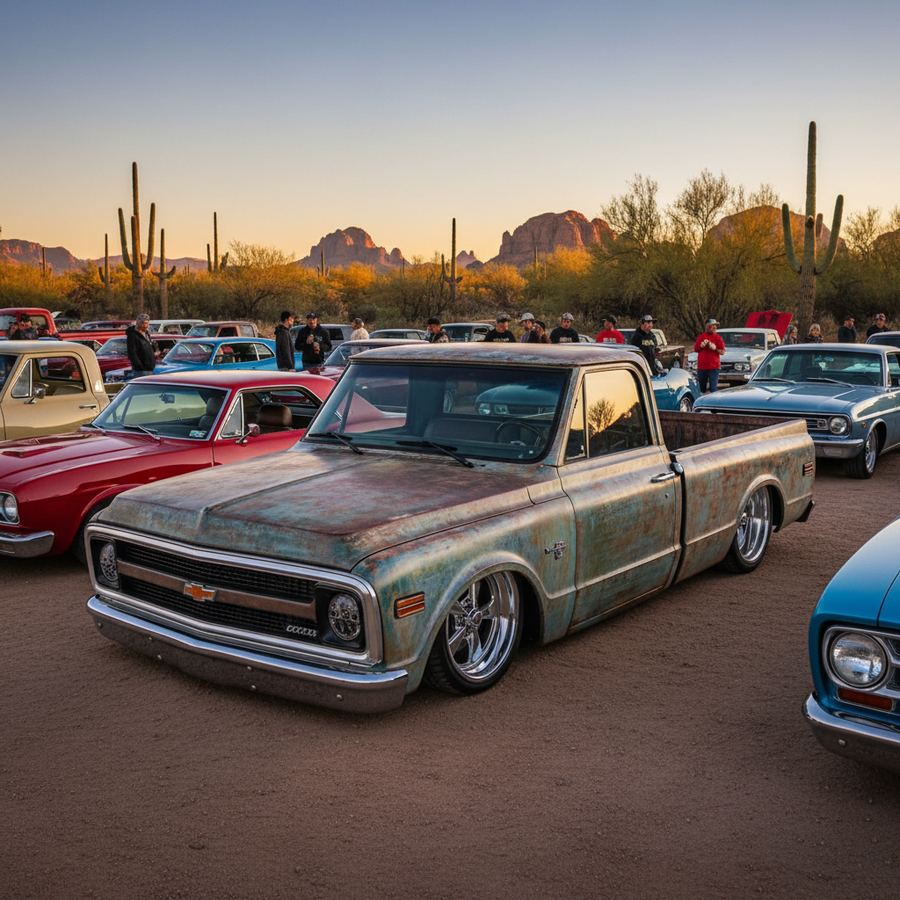
Marcus Webb never set out to build a show truck. He bought a 1972 Chevy C10 long bed in 2020 for $3,800 from a guy in Apache Junction who had been using it as a farm truck. The bed was dented, the cab had surface rust across the roof, the inline six barely ran, and the bench seat had a tear you could put your fist through. Marcus needed a truck to haul parts for his small fabrication shop in Mesa. The C10 was cheap, it was local, and it had a clean title. That was the entire purchasing criteria.
"I brought it to the shop and parked it out front," Marcus says. "Used it for parts runs and dump trips. It ran terrible but it ran. I figured I would fix it up a little at a time when I had downtime between customer jobs."
The 5.3 Goes In
The inline six died for good about four months after Marcus bought the truck. A cracked head and low oil pressure made the decision easy. He had a 5.3 LM7 sitting in the corner of his shop that he had pulled from a wrecked 2005 Silverado for a customer project that fell through. The engine had 140,000 miles on it but good compression on all eight cylinders.
Marcus dropped the 5.3 in over a weekend using a set of Dirty Dingo engine mount adapters and a 4L60E automatic from the same Silverado. The swap in a C10 is about as straightforward as an LS swap gets. The engine bay is huge, the motor mounts are well-documented, and the aftermarket support is massive.
"It took me two days to get it running," Marcus says. "That included making the motor mounts, the transmission crossmember, and the wiring. I have done a lot of LS swaps for customers, so the C10 was fast. If you are doing your first one, give yourself a couple of weekends."
The truck went from barely running to having more power than it ever needed. Even in stock tune with 140,000 miles, the 5.3 made the C10 feel like a different vehicle. It started every time, idled smooth, and had enough torque to merge onto the freeway without white-knuckling it.
Scope Creep Sets In
This is the part of the story that every builder knows. You fix one thing and then you notice the next thing, and then you are three months deep into a project you never planned to start.
After the engine swap, Marcus noticed how bad the brakes felt by comparison. He upgraded to disc brakes on the front with a CPP kit. Then the stock steering felt loose, so he installed a new steering box with a quick ratio. Then the ride height looked wrong, so he dropped the front three inches with lowering springs and flipped the rear axle for a four-inch drop.
"Every time I fixed something, the next weakest link stood out," Marcus says. "The engine swap was supposed to be the end of it. But once the truck drove well, I wanted it to handle well. Once it handled well, I wanted it to look right. That is how a $3,800 parts hauler turns into a real project."
The wheels went next. Marcus pulled off the mismatched steel rims and put on a set of Ridler 695 wheels: 18x8 front, 20x10 rear. The staggered fitment with the lowered stance completely changed the truck's proportions. It went from tired work truck to something that made people look twice in the shop parking lot.
The Patina Decision
Here is where the build took its most interesting turn. Marcus originally planned to prep and paint the truck when the budget allowed. But as the truck sat in front of his shop, customers started commenting on it. Not "when are you going to paint that thing?" comments. More like "that patina is perfect, do not touch it" comments.
The Arizona sun had done its work on the original paint over the decades. The cab was a faded and chalky two-tone of white and green, with surface rust blooming through in places. The bed had bare metal patches where the farm use had worn through to steel. The overall effect was an honest, weathered look that could not be faked with a spray gun.
"I went back and forth on it for a while," Marcus says. "Part of me wanted a clean, painted truck. But the patina was real, and people responded to it. I decided to clear-coat what was there to stabilize it and keep it from getting worse. Sanded the loose rust, treated the metal, and sprayed clear over the whole truck. What you see now is exactly what the truck looked like after 50 years in Arizona, just sealed and protected."
The bed got lined with a spray-in bedliner, which gave the beat-up steel a uniform look without hiding its character. Marcus kept the tailgate in its original weathered state with the Chevrolet stamping still legible through the patina. It is one of those details that stops people at shows and starts conversations.
Building the Engine Up
After living with the stock 5.3 for about a year, Marcus started adding power in stages. A truck-style cam from Texas Speed gave it a lopey idle and better top-end pull. Long-tube headers replaced the stock manifolds. A cold air intake and a tune on the stock ECU through HP Tuners brought the combination together.
"It is probably making around 340, 350 horsepower at the wheels," Marcus estimates. "I have not put it on a dyno. For a truck this light with a three-speed rear gear ratio, that is more than enough. It will light up the tires if you stab it from a stop."
The 4L60E got a shift kit to firm up the shifts and a deep aluminum pan for extra fluid capacity. Marcus says the automatic suits the truck's personality better than a manual would. It is meant to cruise, not race. Roll into a cruise night, park it, and let the idle do the talking.
The Interior
The inside of the truck matches the outside in philosophy: functional, honest, and not trying to be something it is not. Marcus recovered the bench seat in dark gray vinyl, keeping the original frame and springs. The dash is stock with a few additions: a small set of auxiliary gauges mounted under the dash for oil pressure and water temperature, and a modern head unit recessed into the glovebox opening for music.
The floor is sprayed with the same bedliner material as the bed. No carpet, no mats. It is a truck. Marcus keeps a pair of work gloves on the seat and a shop rag in the door pocket. The interior says working vehicle, not show queen, and that contrast against the clean engine bay and the stance is part of what makes the truck interesting to look at.
"I did not want to build something I was afraid to use," Marcus says. "I still haul stuff in it. I still park it at job sites. It has scratches in the bedliner and dirt on the floor. That is the point."
The Show Circuit
The C10 made its first real show appearance at a truck meet in Tempe and won best patina. After that, Marcus started bringing it to more events, mostly weekend shows and evening meets across the east Valley. The truck consistently draws crowds and conversations, particularly from people who appreciate the contrast between the rough exterior and the clean mechanical work underneath.
"I will pop the hood and people expect to see the old six," Marcus says. "When they see the LS with painted valve covers and clean wiring, they start asking questions. That is the fun part. The outside says beater and the underneath says built."
The truck has become an unofficial mascot for Marcus's shop. It sits out front most days, and potential customers see it before they walk through the door. It has brought in fabrication and swap work from people who saw it at a show or parked at the curb and stopped in to ask about it.
What It Cost
Marcus keeps rough track of the build cost. The truck was $3,800. The engine and transmission were essentially free since they were already in his shop. He estimates about $7,000 in parts across the suspension, brakes, wheels, tires, interior, and miscellaneous hardware. The clear coat and bedliner ran about $1,500 in materials since he sprayed both himself.
"Call it $12,000 to $13,000 all in, not counting labor since I did everything myself," Marcus says. "You could not build this truck for that number if you were paying shop rates. But that is the advantage of having the skills and the space. Sweat equity is real."
The C10 sits alongside other Arizona-built machines in our reader rides section. If you are in the Mesa area and want to see it in person, Marcus brings it to the local shows and meets regularly during the season. Stop by his shop on a weekday and there is a good chance it is parked right out front, looking like it has been there for 50 years. In a way, it has.