Muscle Car Classifieds - Arizona Auto Scene
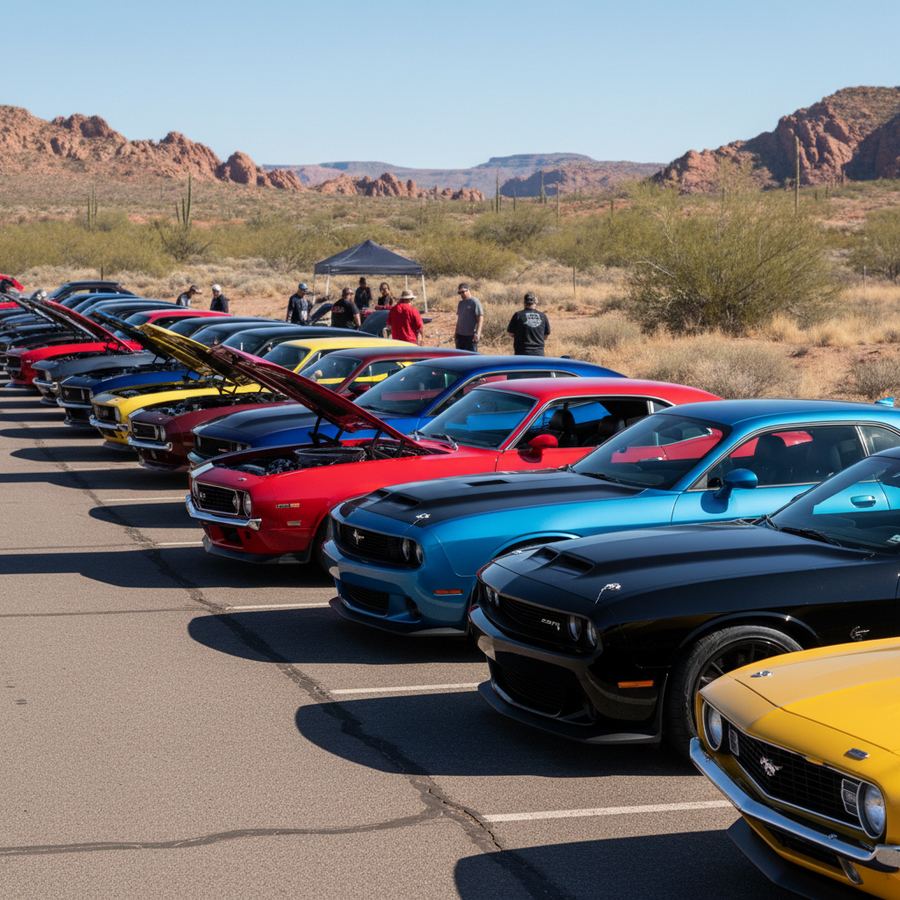
Arizona is one of the best states in the country to buy or sell a muscle car. The dry climate means rust is rare, the car culture is deep, and the buyer pool includes locals, snowbirds, and national collectors who fly in specifically to shop. Whether you are looking for a numbers-matching restoration, a restomod with modern running gear, or a rough project that needs everything, the Arizona market delivers.
What Is Available in Arizona
The Arizona muscle car market covers every era and every price point. The most commonly listed vehicles in the state include:
- Chevrolet Camaros and Chevelles. First-gen Camaros (1967-1969) and A-body Chevelles are the backbone of the Arizona muscle market. SS models, Z/28s, and big-block cars command strong prices. Even base models with six-cylinder engines sell well as project platforms.
- Ford Mustangs. Classic Mustangs from 1964 through 1973 are everywhere in Arizona. Fastbacks and convertibles lead the market, but coupe models are popular with buyers looking for an affordable entry into the hobby. Fox-body Mustangs have surged in the last few years as well.
- Dodge Chargers and Challengers. Mopar muscle tends to be pricier than GM or Ford equivalents, but Arizona has a strong Mopar community. The 1968-1970 Chargers and 1970-1974 Challengers are perennial favorites. B-body Plymouths show up less often but sell quickly when they do.
- Pontiac GTOs and Firebirds. The GTO started the muscle car era, and good examples are always in demand. Trans Ams from 1969 through the early 1980s have a dedicated following in Arizona.
- Buick GSX, Olds 442, and AMC. Less common but worth watching. These cars have smaller production numbers, which supports values, and the Arizona market occasionally turns up rare examples that have been sitting in garages for decades.
Arizona Pricing Trends
The muscle car market has settled after the post-pandemic price spikes. Prices in Arizona tend to track slightly above national averages because rust-free examples carry a premium. Here is what the current market looks like:
- Driver-quality cars (good running condition, decent paint, usable as-is) range from $25,000 to $55,000 for popular models like Camaros, Mustangs, and Chevelles. Mopar and rare models run higher.
- Project cars (running but needing work, or complete but not running) range from $8,000 to $25,000 depending on the model and completeness. Basket cases and partial cars fall below that, but the cost to complete them often exceeds what a finished car would cost.
- Show-quality restorations start around $60,000 for common models and climb past $100,000 for big-block, numbers-matching, documented cars. Concours-level restorations of rare models can reach well into six figures.
- Restomods (classic body with modern drivetrain, brakes, and suspension) are a growing segment. A well-built restomod Camaro or Mustang with an LS swap, disc brakes, and modern suspension typically sells for $45,000 to $85,000 in Arizona.
Winter is peak season for sales. The influx of buyers during Scottsdale Car Week in January creates a ripple effect across the entire private market. If you are selling, listing between November and March gives you the largest audience. If you are buying, summer deals can save 10 to 15 percent as the market slows.
What to Look for When Buying
Arizona's dry climate is a huge advantage, but it does not make every car a good buy. Here is what to inspect carefully:
- Verify the car's history. Just because a car is in Arizona now does not mean it has always been here. Many muscle cars have been brought in from rust-belt states. Check for signs of previous rust repair: fresh undercoating over rough metal, mismatched panel gaps, or bubbling under fresh paint. A Marti report (Ford), PHS documentation (Pontiac), or Protect-O-Plate (GM) helps verify the car's story.
- Check the VIN and trim tag. Numbers-matching claims should be verified against the VIN, body plate, and engine stampings. Cloned cars (a base model dressed up to look like a rare model) are common in the muscle car market. If the seller claims it is an SS, Z/28, or R/T, the documentation should back it up.
- Inspect sun damage. What Arizona does not do with rust, it does with UV. Check for faded or oxidized paint on horizontal surfaces (hood, roof, trunk lid). Interior materials dry out and crack. Rubber seals deteriorate. Dashboard pads warp and split. These are cosmetic issues, but they affect value and the cost of bringing the car to show condition.
- Assess the cooling system. Muscle cars were not designed for sustained 115-degree ambient temperatures. If the car will be driven in Arizona, the cooling system needs to be up to the task. An upgraded radiator, electric fans, and fresh coolant are common modifications on Arizona muscle cars for good reason.
Common Scams to Avoid
The muscle car market attracts fraud because the values are high. Watch for title washing (salvage titles from other states retitled in Arizona), clone cars sold as originals (a base Camaro with SS badges), deposit scams on below-market cars that do not exist, and odometer rollbacks on 1980s and 1990s muscle entering the collector market. Always verify with VIN decoding, factory documentation, and a full vehicle history report.
For more on the buying and selling process in Arizona, read our guide on selling a car in Arizona, which covers title transfer, emissions, and safe transaction practices.
Current Listings
Browse the latest muscle car listings from Arizona sellers below. All listings are from local, verified members of the Arizona car community.
New listings are added regularly. Check back often or follow us on social media for alerts when new muscle cars are posted.
Looking for parts for your muscle car build? Check the parts and accessories classifieds. Want to show off the finished product? Browse upcoming car shows and events across Arizona.