Tire Setup for Arizona Heat
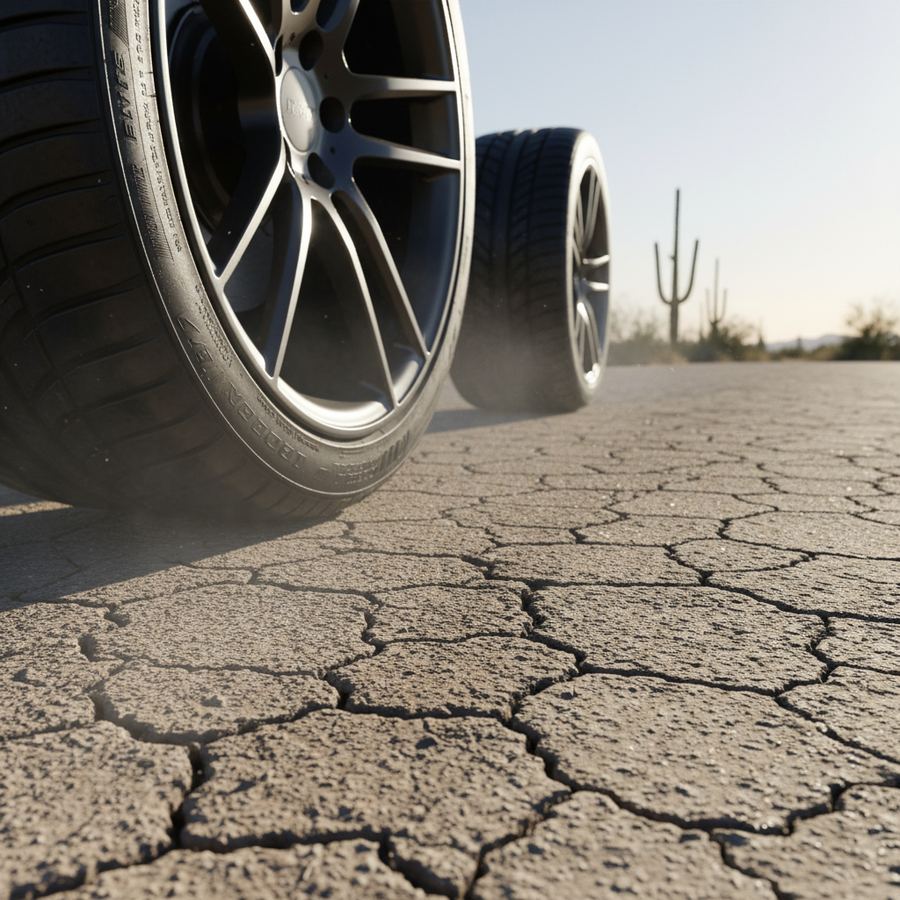
Arizona is one of the hardest environments in the country for tires. Between pavement temperatures that regularly exceed 150 degrees Fahrenheit in summer, intense UV radiation year-round, and bone-dry air that accelerates rubber aging, tires wear out and degrade here in ways that drivers in other states never have to think about. If you drive in Arizona, especially if you drive something you care about, understanding how heat affects your tires is not optional. It is a safety issue.
Why Arizona Is Different
Most tire recommendations assume moderate climates. The rated treadwear numbers, the speed ratings, the recommended replacement intervals. They are all based on conditions that look nothing like Phoenix in July. Here is what actually happens to tires in Arizona:
- Pavement temperature vs. air temperature. When the air temperature hits 115, the pavement is often 150 to 170 degrees. Your tires are the only thing between your car and that surface. Rubber compounds soften, internal temperatures climb, and the structural integrity of the tire changes in real time.
- Accelerated aging. UV and ozone break down the polymers in rubber. Arizona has more UV exposure than almost anywhere in the continental US, and the dry air means there is less atmospheric filtering. Tires age roughly twice as fast here compared to the Pacific Northwest or the Midwest.
- Thermal cycling. Arizona's daily temperature swings, from 75 degrees overnight to 115 in the afternoon, create repeated expansion and contraction cycles in the rubber. Over time, this causes micro-cracking in the sidewalls and tread compound, even on tires with plenty of tread left.
The result is that a tire with 50% tread remaining may actually be unsafe if it has been on the car for three or four years in Arizona. Tread depth alone is not a reliable indicator of tire condition in this climate.
Reading the DOT Date Code
Every tire has a four-digit code on the sidewall that tells you when it was manufactured. The first two digits are the week, the last two are the year. A code reading 2423 means the tire was made in the 24th week of 2023. In most climates, tires are good for six to ten years. In Arizona, plan on four to five years as a practical maximum, regardless of mileage. Past five years, have them inspected annually by someone who knows what to look for.
When buying tires, check the date code before you pay. Some shops and online retailers sell old stock. A tire manufactured two years ago and stored in a warehouse is already two years into its life, and storage conditions matter. If the tires sat in a hot warehouse in the Southwest, the aging process was already underway before they went on your car.
Choosing the Right Compound
Tire compounds are formulated with different priorities. Some emphasize grip, some prioritize longevity, and some try to balance both. For Arizona, the compound's heat resistance is the factor that matters most, and it is the one most buyers overlook.
UTQG ratings help, but they do not tell the whole story. The Uniform Tire Quality Grading system rates tires on treadwear, traction, and temperature resistance. The temperature rating (A, B, or C) indicates the tire's ability to dissipate heat. In Arizona, you want an A-rated tire. B-rated tires are acceptable for moderate driving, but if you are doing highway miles in summer, the extra thermal margin of an A-rated tire is worth having.
The treadwear number gives you a relative idea of longevity, but remember that those numbers were generated on a test course in Texas, not on the I-10 in August. Expect to get roughly 70 to 80 percent of the rated treadwear in Arizona conditions. A tire rated for 60,000 miles will realistically give you 42,000 to 48,000 miles here.
Compare tire options by heat rating and treadwear before choosing for Arizona conditions. The price difference between a B-rated and an A-rated tire in the same size is usually modest, and the performance gap in extreme heat is significant.
Pressure Management in Extreme Heat
Tire pressure changes approximately one PSI for every ten-degree change in ambient temperature. In Arizona, that means a tire set to 35 PSI in the cool morning can be running at 40 or more PSI by afternoon. That is a meaningful change in contact patch, ride quality, and handling behavior.
Here is how to manage it:
- Set pressures cold, first thing in the morning. Do not adjust pressures after driving, even a short distance. The friction heat from driving plus the ambient heat makes it impossible to get an accurate cold reading once the tires are warm.
- Use the vehicle placard, not the tire sidewall maximum. The number on the sidewall is the maximum safe pressure for that tire at maximum load. The number on the driver's door jamb placard is what the manufacturer recommends for your specific vehicle. Start there.
- Do not bleed pressure on hot days. It is tempting to let air out when you see high readings in the afternoon. Do not do it. The tire was designed to handle the pressure increase from normal driving and ambient heat. If you bleed air when hot, the tire will be underinflated when it cools, which causes more heat buildup from sidewall flex and accelerates wear.
- Check pressures weekly in summer. Monthly checks are fine in mild weather. In Arizona summer, weekly checks catch slow leaks and valve stem issues before they become blowouts.
If you are driving to car shows or events across the Valley during summer, check pressures before you leave. The combination of highway speeds and extreme pavement temperatures puts maximum stress on the tires. An underinflated tire generating excess heat on 160-degree pavement is one of the most common causes of tire failure in Arizona.
Performance and Show Car Considerations
Performance compounds are formulated for grip at high temperatures, but they also wear faster in sustained heat and may overheat on long highway drives without the cool-down cycles that track use provides. For cars that see both shows and spirited driving, a high-performance all-season is often the better choice in Arizona. You give up some grip compared to a dedicated summer tire, but you gain longevity and more predictable behavior across daily temperature extremes.
For dedicated show cars that trailer to events, tire age is the bigger concern. The classic car community in Arizona deals with this constantly. Vintage correct tires on a show car may look right, but if they are old stock with hardened compounds, they are a liability.
Storage and Protection
If your car sits during summer, store it on jack stands to prevent flat spots when possible. If not, inflate to the sidewall maximum for storage and roll the car a few inches every couple of weeks. UV-blocking tire covers are worth the small investment for cars stored in carports or near windows.
When to Replace
Replace tires in Arizona when any of the following apply:
- Tread depth reaches 4/32 of an inch (not 2/32 like the legal minimum; the reduced tread depth significantly reduces heat dissipation capability)
- Visible sidewall cracking, even if tread depth is adequate
- Age exceeds five years from the manufacture date
- Any bulge, bubble, or deformation on the sidewall
- Uneven wear patterns that indicate alignment or suspension problems
Tires are the single most important safety component on your vehicle. In Arizona's extreme conditions, they deserve more attention, not less, than what the standard recommendations call for. Spending the time to choose the right tire, maintain correct pressures, and replace them before they fail is one of the smartest things you can do as a driver in this state.
For more on keeping your car ready for Arizona conditions, check our guides on show season prep and the Arizona car show finder.